

Kinectiv Sport + Health
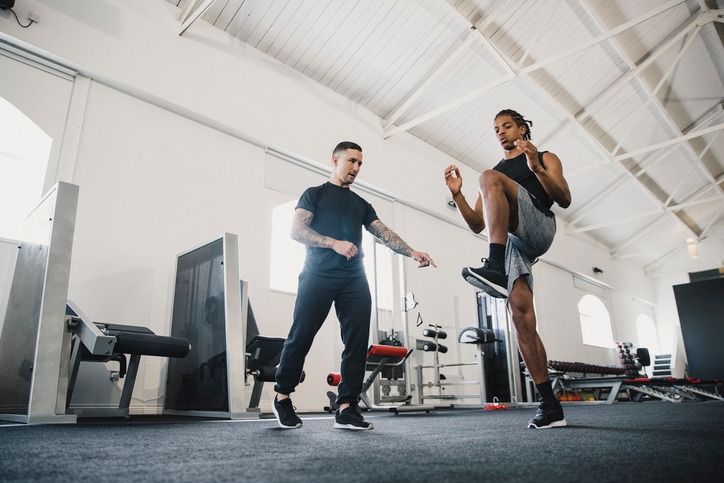
We train our legs, our core, even our grip strength, but when was the last time you trained your feet? Most of us assume they’re just along for the ride, but the strength and mobility of your feet can completely change the way your whole body feels and functions.
Most of us spend our lives in cushioned, supportive shoes designed to protect our feet, but that constant support often comes at a cost. Supportive modern footwear can weaken our intrinsic foot muscles over time, limiting their ability to have proprioception of the foot. This means the brains connection to the foot is weakened or even interrupted. This may lead to impaired balance, altered foot mechanics during walking, and a higher likelihood of injury. Think of your feet as the foundation of a house if the foundation isn’t stable or adaptable, everything above it must compensate.
Benefits of Foot Training for Health
Your feet aren’t just passive structures that hold you up. Your feet consist of multiple joints, bones, and ligaments to flex, grip, and sense the ground beneath you. Every step sends valuable information to your brain and core to help your body maintain balance and alignment.
When your foot muscles are weak or stiff, or when shoes block that sensory feedback, your body loses this critical foot-to-core connection. This interrupts the kinetic chain, the linked system of muscles and joints that work together for movement which can then disrupt other areas of the body such as the ankles, knees, hips, and even the spine, forcing them to take on extra work. This can contribute to:
- Flat feet, collapsed arches, and plantar fasciitis
- Ankle instability and prone to more sprains
- Poor gait mechanics
- Knees, hips, and low back disorders
- Balance issues and reduced athletic performance
- Increased fall risk in elderly
Barefoot Training: More Than a Trend
You don’t have to ditch your shoes entirely or start running marathons barefoot. But incorporating intrinsic foot-strengthening exercises, such as the short foot exercise and barefoot training, into your routine can dramatically improve the body’s proprioception the ability to sense where the foot is and how it’s moving. Strengthening this connection can reduce pain, improve stability, and decrease the risk of falls. A 2021 study investigating the benefits of intrinsic foot muscle strengthening in older adults found statistically significant improvements in foot and leg strength, balance, mobility, and proprioception, as well as enhanced sensation in the foot.
Some exercise examples are:
- Short foot
- Balance training, foot to hip connection – Singel leg stance with 1st ray control
- Toe Controlled Articular Rotation
- Banded toe tap
- Plantar fascia stretch and ball roll – sensory feedback
- Banded Hallux big toe flexion
Ready to Rebuild Your Foundation?
Like any form of training, foot strengthening should be done progressively and with proper guidance especially if you have a history of foot pain or have neglected your foot mobility. Better movement starts from the ground up literally. Good movement truly begins from the ground up. Care for your feet, and your whole body will benefit.
Take the next step toward stronger, healthier movement. Book your session with Tina, Certified Barefoot Trainer.
References
- Futrell, E. E., Roberts, D., & Toole, E. (2022). The effects of intrinsic foot muscle strengthening on functional mobility in older adults: A systematic review. Journal of the American Geriatrics Society, 70(2), 531–540. https://doi.org/10.1111/jgs.17541 .
- Yi, Y., Jianchao, Z., Wen, Z., Ke, L., Yantao,L., Effect of foot strike patterns and angles on the biomechanics of side-step cutting. Front Bioeng Biotechnol. 2024;12:1461247. doi:10.3389/fbioe.2024.1461247.
- Rodríguez-Longobardo, C., Gómez-Ruano, M. Á., & Canosa-Carro, L. (2025). Effects of barefoot and minimalist footwear strength-oriented training on foot structure and function in athletic populations: A systematic review.Journal of Clinical Medicine, 14(21), 7629. https://doi.org/10.3390/jcm14217629